Workplace policies are essential tools that help Kenyan businesses comply with the Constitution and labour statutes, reduce legal risk, and create predictable, fair and safe working environments for both employers and employees.
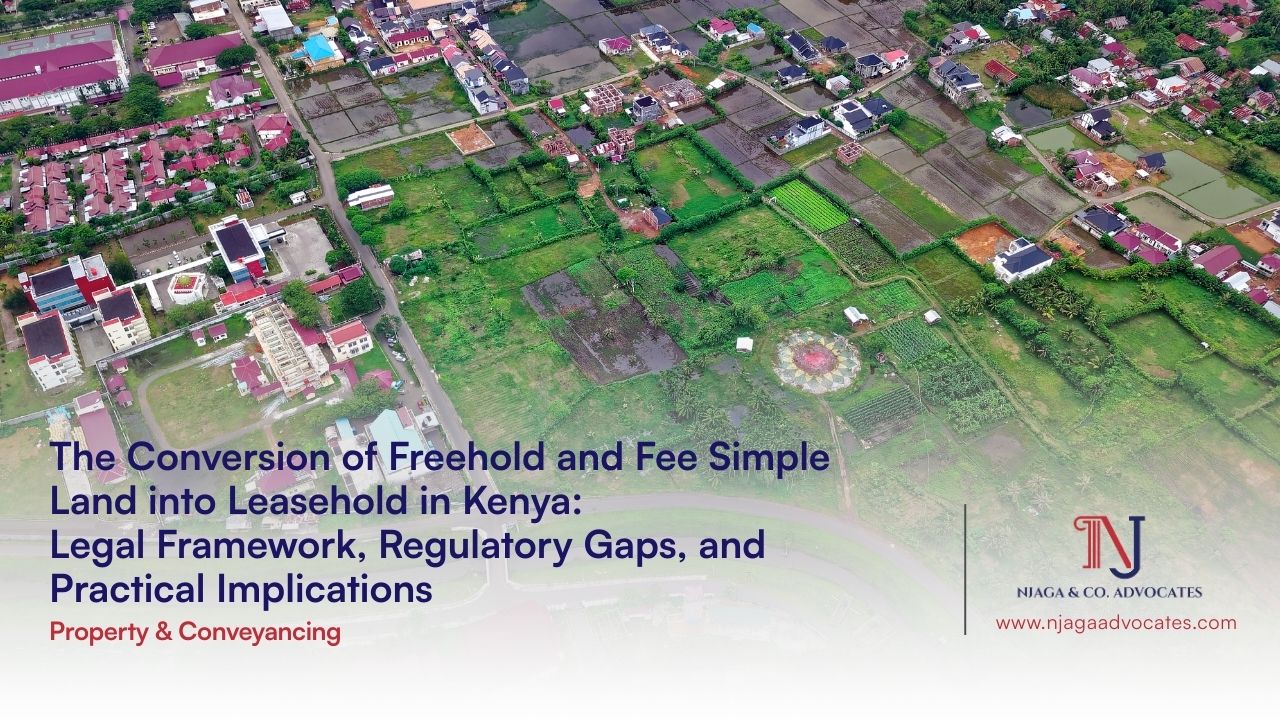
Land tenure lies at the heart of property ownership and conveyancing in Kenya. While Kenyan law, in Article 64 of the Constitution, recognizes freehold and leasehold land…
Under Section 33(1) of the Kenya Citizenship and Immigration Act, 2011 (Cap. 170), prohibited immigrants are foreign nationals who are barred from entering or remaining in Kenya due to various serious legal, security, health, or public order concerns.
Introduction A branch of a foreign company is established when a new location, division, department, or office is established in another jurisdiction as part of a foreign legal entity. This entity is organized to conduct business and promote the objectives of the foreign company in the new jurisdiction. Unlike a subsidiary, a branch does not…
Understanding Trademarks A trademark is a form of intellectual property that consists of a distinctive symbol, design, or expression that differentiates a product or service from others in the market. The sign may consist of one or more distinctive words, letters, numbers, drawings or pictures, monograms, signatures, colours or a combination of colours etc. The…
Family trusts have become an increasingly popular vehicle for estate planning, wealth management, and intergenerational asset transfer in Kenya. Yet despite their growing adoption, many individuals, families, and business owners remain unclear about the tax implications.
Learn how to protect and register copyright in Kenya. Explore copyright laws, KECOBO registration, ownership, infringement, licensing, enforcement, and creators’ rights under the Copyright Act.
We use cookies to ensure that we give you the best experience on our website. If you continue to use this site we will assume that you are happy with it.